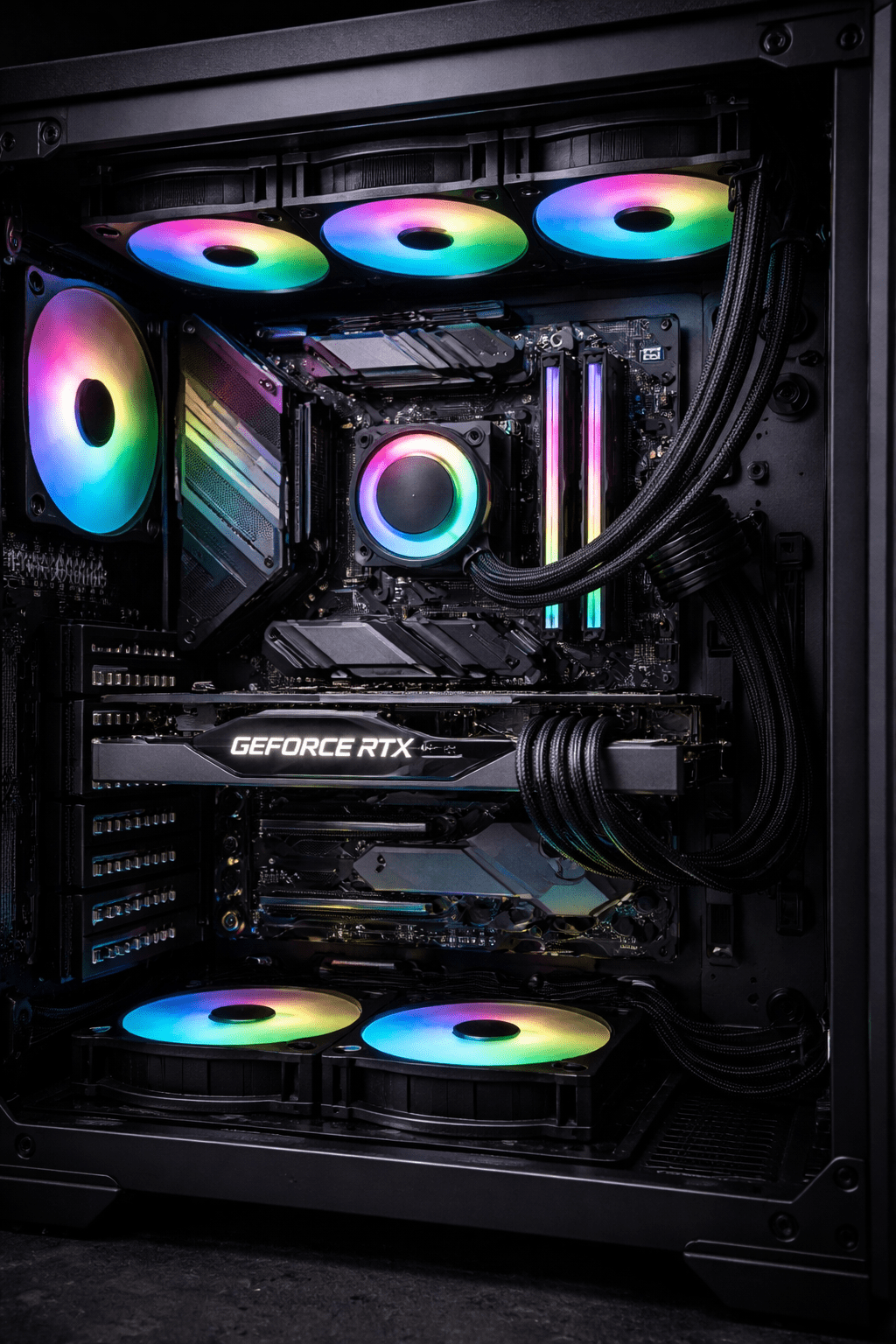
Tag: Computers

  • Understanding Motherboard Sizes (and Why Your Case Choice Matters)

    Understanding Motherboard Sizes (and Why Your Case Choice Matters)

    Let’s Talk…

    When you’re building a PC, it’s easy to get caught up in CPUs and GPUs—but one of the most overlooked (and important) decisions is choosing the right motherboard size.

    Pick the wrong one, and your parts simply won’t fit together. Let’s break it down in a simple, practical way.


    The Main Motherboard Sizes (Form Factors)

    Motherboards come in standardized sizes, also known as form factors. These determine how big the board is and what kind of case it will fit in.

    1. ATX (Standard Size)

    • Dimensions: 12 x 9.6 inches
    • Best for: Full builds with lots of upgrades
    • Why choose it:
      • More RAM slots (usually 4)
      • More PCIe slots (great for GPUs, capture cards, etc.)
      • Better airflow in larger cases

    👉 Practical Dad Tip: If you want flexibility for future upgrades, ATX is the safest choice.


    2. Micro-ATX (mATX)

    • Dimensions: 9.6 x 9.6 inches
    • Best for: Budget builds and smaller setups
    • Why choose it:
      • Usually cheaper than ATX
      • Fits in smaller cases
      • Still supports most gaming needs

    👉 This is the sweet spot for most people—affordable without giving up too much.


    3. Mini-ITX

    • Dimensions: 6.7 x 6.7 inches
    • Best for: Compact, minimalist builds
    • Why choose it:
      • Tiny footprint
      • Great for desk space or living room setups
    • Trade-offs:
      • Only 2 RAM slots
      • Limited expansion options
      • Can run hotter due to tight space

    👉 Choose this if size matters more than expandability.


    Why Your Case Needs to Match Your Motherboard

    Here’s the key rule:

    Your PC case must support your motherboard’s form factor.

    Not all cases fit all motherboards.

    Quick Compatibility Guide:

    • ATX case → fits ATX, Micro-ATX, Mini-ITX
    • Micro-ATX case → fits Micro-ATX, Mini-ITX
    • Mini-ITX case → fits Mini-ITX only

    If you try to put an ATX motherboard into a Micro-ATX case… it’s just not happening.


    How to Check Before You Buy

    Before purchasing anything, take 30 seconds to double-check:

    1. Motherboard size (listed in product specs)
    2. Case compatibility (look for “Supports ATX / mATX / Mini-ITX”)

    Most retailers like Amazon or Newegg clearly list this—just scroll down to the specifications section.


    A Simple Way to Choose

    If you’re unsure what to pick, here’s a quick recommendation:

    • Go ATX → if you want room to upgrade and don’t mind a bigger case
    • Go Micro-ATX → if you want the best balance of size and cost
    • Go Mini-ITX → if you’re building a compact or stylish setup

    Final Thoughts

    Motherboard size might not be the most exciting part of your build, but it’s one of the most important. Getting this right ensures everything fits, airflow stays clean, and your upgrade options stay open.

    And as always—plan your build before you buy. It saves time, money, and a lot of frustration.
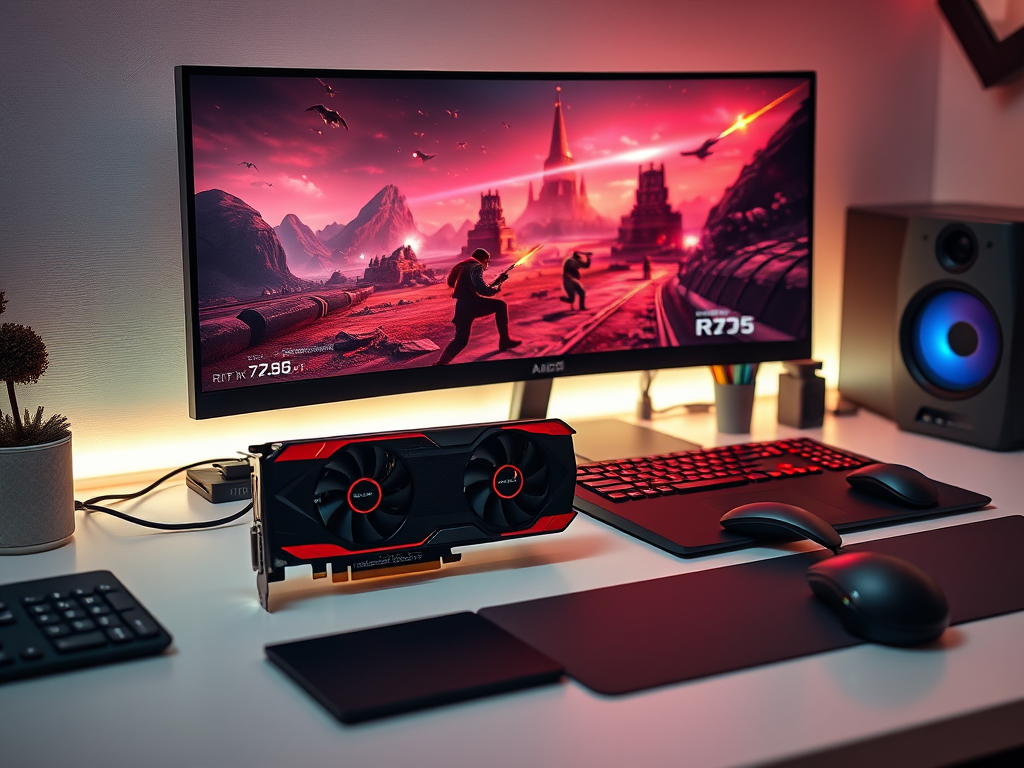
  • Best Budget GPUs in 2026 (1080p & 1440p PracticalDadtech Picks)

    Best Budget GPUs in 2026 (1080p & 1440p PracticalDadtech Picks)

    If you’re building or upgrading a gaming PC in 2026, the GPU is still the most important part of your system. It’s also the easiest place to overspend.

    As dads (or just practical adults with responsibilities), we don’t need the $1,200 monster GPU unless we truly benefit from it. What we want is smooth performance, strong value, and a card that will last a few years without regret.

    This guide focuses on budget-friendly GPUs that actually make sense — for 1080p and 1440p gaming — without blowing up your wallet.

    Quick Reality Check: What Are You Actually Playing?

    Before choosing a GPU, ask yourself:

    • Are you gaming at 1080p or 1440p? Does it even matter to you?
    • Is your monitor 144Hz or higher? The higher the number, the smoother the gameplay
    • Are you playing competitive shooters or cinematic single-player games?
    • Do you plan to upgrade again in 2–3 years?

    Most casual gamers I talk to are:

    • Gaming at 1080p 144Hz or 1440p 165Hz
    • Playing games like Battlefield, Warzone, Helldivers, Fortnite, or story-driven AAA titles
    • Trying to stay under $500

    That’s exactly who this list is for.

    Best GPUs Under $300 (1080p Value Kings)

    If you’re gaming at 1080p, you don’t need a monster card. You need consistency.

    🥇 AMD Radeon RX 7600 (8GB)

    Why it’s great:

    • Excellent 1080p performance
    • Affordable
    • Low power draw
    • Great value per dollar

    Who should buy it:

    • 1080p 144Hz gamers
    • Budget builds under $1,000
    • Upgrading from older GTX 10-series or RX 5000 cards

    You’ll get high settings in most games and competitive titles will easily push high refresh rates.

    PracticalDadtech verdict:

    If you just want smooth 1080p gaming without overthinking it, this is a strong pick.

    Alternative: NVIDIA RTX 3060 (10-12GB)

    Still relevant because:

    • 10-12GB VRAM
    • Strong DLSS support
    • Mature drivers
    • Strong performance for games like Fortnite, Apex

    If found at a good price, it’s still very usable — especially for games that benefit from DLSS.

    Best GPUs Under $400 (Strong 1080p / Entry 1440p)

    This is the sweet spot for practical gamers.

    🥇 AMD RX 6700 XT / 6750 XT (12GB)

    Why it’s excellent:

    • 12GB VRAM (huge for longevity)
    • Strong 1440p performance
    • Often discounted

    This card punches above its price.

    Who should buy it:

    • 1440p gamers on a budget
    • Builders who want 2–3 years of relevance
    • Anyone who values performance over ray tracing

    PracticalDadtech verdict:

    Probably one of the best “value longevity” GPUs still available.

    🥈 NVIDIA RTX 4060 Ti (8GB or 16GB version)

    Pros:

    • DLSS 3 Frame Generation (Jargon… NVidia’s Deep Learning Super Samping, AI technology… I guess).
    • Efficient power usage
    • Good for smaller builds

    Cons:

    • 8GB version may age faster
    • Price-to-performance isn’t as strong as AMD in pure raster

    If you value future upscaling tech, this may be worth it.

    Best GPUs Under $500 (1440p Sweet Spot)

    This is where you start getting truly comfortable 1440p performance (Also known as QHD).

    🥇 AMD RX 7800 XT (16GB)

    Why it’s hard to beat:

    • 16GB VRAM
    • Excellent 1440p performance
    • Strong value for the performance tier
    • Good longevity for future titles

    For most practical gamers, this is the “buy it and stop thinking about upgrades” card.

    Who should buy it:

    • 1440p 165Hz players
    • AAA gamers who want high settings
    • Builders who want headroom for future games

    PracticalDadtech verdict:

    If your budget allows it, this is the smartest long-term buy in 2026.

    🥈 NVIDIA RTX 4070 (If Found Near $500)

    If you can find it near this range:

    • Great ray tracing
    • DLSS 3
    • Efficient
    • Excellent overall balance

    You’re paying for NVIDIA features here, not just raw power.

    Final Thoughts: Buy for Your Monitor, Not for Hype

    The best GPU isn’t the most expensive one.

    It’s the one that:

    • Matches your resolution
    • Matches your refresh rate
    • Matches your real gaming habits

    As practical gamers, we don’t chase specs — we chase smooth performance and good value.

    If you’re building soon, pair one of these GPUs with a solid CPU and you’ll have a system that lasts years without regret.